

Still here
This story was written fairly recently and draws on my experience working for Samaritans.

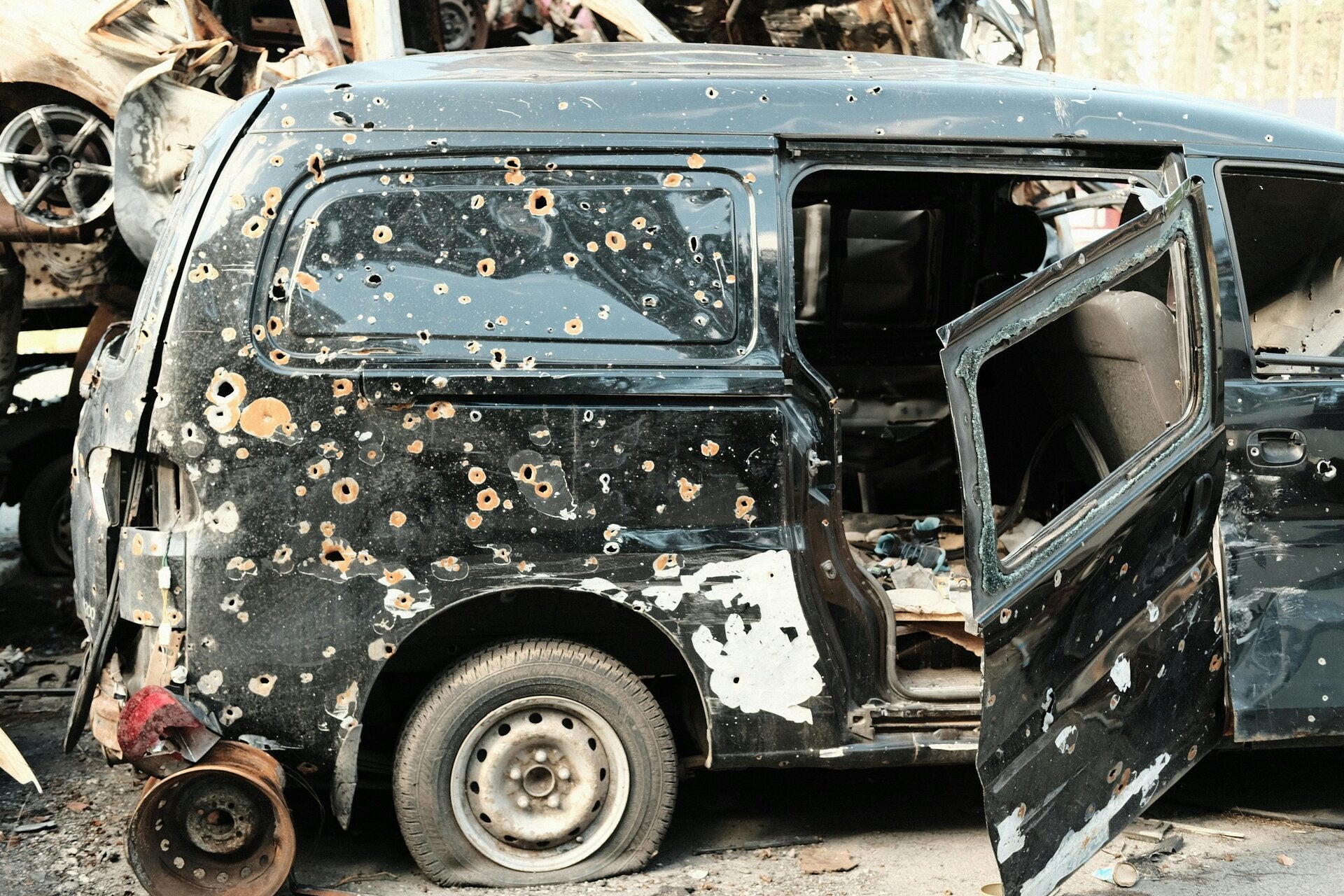
Her name was Maya, and she was dead and not dead. She lay slumped over the steering wheel, blood congealing on the windscreen in slow, dark blooms. The snow fell in patient silence, softening everything it touched—the bonnet, the wipers, the mirrors. The stone wall the old Ford had crashed into was already coated white. Beyond it the world had been erased. Sixty seconds since the crash—if seconds still mattered. If time still belonged to her.
The temperature gauge on the instrument panel was still working. It showed -8C. She’d been in a hurry to get home. Moving was not an option; she just couldn’t. Her limbs didn’t seem to be working. All Maya could do was lie there and wait. Her mind was still working. In fact, it was in overdrive. What happens next?
2 minutes into the wall
Pinpricks of light pierced the dark. People were coming. She could hear voices."
She took the bend too fast."
"Every winter, there’s black ice here. I knew there’d be an accident one day."
Maya could glimpse them now—a young man and a middle-aged woman, both carrying torches. She couldn’t speak. The man pulled at the car door but it was stuck. He braced a boot against the buckled frame and wrenched it open.
"Who’s in the car?"
"A woman. She’s alone. She looks in a bad way. I think she’s dead."
I’m not dead yet, but I don’t know how long I’ve got. How far is it to the other side of this wall?
The salty taste of blood was in her mouth, making her gag. She could feel the gentle touch of the man’s hands as he eased her head from the steering wheel as if he were releasing a newborn lamb trapped in a hedge. The blood on the windscreen had spread into the outline of her own country, an outline she'd traced many times at school. It seemed an age since the war began; the war that took her husband. She’d left afterwards, searching for peace—for herself, for her teenage son. And the guilt - the guilt of one who left, the guilt of one who could leave.
Maya—the survivor.
4 minutes into the wall
Two people appeared in her eyeline now. The man—young, barely in his 20s, hurriedly dressed, cagoule over pyjama bottoms, old boots, laces loosely knotted, no socks. And his mother—middle-aged, short unruly hair, dressing gown covered by an old overcoat. Her husband? Where was he? Was he dead? Did they have that in common?
The smell of nicotine and alcohol on the young man reminded her of smoke-filled taverns at home. How she hated that but she wished she was back there now in those carefree pre-war days.
"I’m not sure she’s going to make it, mum."
Mum? She’s your mum, is she? I’m a mum too.
"Call 999, Jack."
And her own son? Where was he now? At least he was safe from the war. She’d done that much. But she regretted the fight they’d had. Was she being selfish, taking him away from his friends, his girlfriend, the rest of his family? They’d left their homeland just in time; before he was old enough to be recruited; before he was old enough to experience the horror of war; before he could decide for himself. He’d be at home now, in a small flat they’d managed to rent, a home she was hurrying to. She knew he’d be thinking about going back. She wondered whether her death might free him to return. Would that lead to his death too?
Maya—the mother.
6 minutes into the wall
"We need to get her out. We can’t wait for the paramedics. We need to resuscitate her now. You hold her under her arms. I’ll free her legs."
I think it’s too late. I can’t feel anything.
"Lay her on the ground here, Jack."
I can’t even feel the cold.
Maya was used to the cold in her own country. Even so, it was unusual not to feel it. It was as if her body had decided for itself that the cold didn’t matter anymore. She could still see, though. She lay there watching the woman who seemed to know what she was doing. She checked Maya's airway.
"The ambulance will be here soon," the woman said.
Was she a nurse?
"Now watch me, Jack. I'll need you to take over."
The woman started chest compressions, urgently counting up to 30.
It’s no good. I’m more than halfway through the wall. I know you mean well, but it’s too late.
She’d been going home after an evening in the refugee support centre. There’d been several visits and phone calls that evening. It was important that the people who came in could talk to someone who understood; someone who’d gone through what they were going through; someone who had fled like them and could speak both English and their language.
Maya—the refugee.
8 minutes into the wall
"I had a pulse. I’ve lost it. I’m still here. Hang on."
I’m trying, but I think I’m going.
Her senses were going—one by one. She could no longer taste or smell anything. Sight was still hers. Observing the distress on the faces of the woman and the man as they tried to resuscitate her, she felt for them. She knew what it was like to want to help but not be able to.
She could still hear. She heard her phone ringing.
Where was it? Was it Misha?
Jack looked around, then picked up the phone. The screen showed Misha. Too late. There was silence.
Please don’t distress yourselves. You did all you could.
"I think she’s gone," said the woman, and she closed Maya’s eyes.
Maya—the carer.
10 minutes into the wall
So that was it. All she had left was her hearing. She knew that hearing was the last sense to go. She’d worked on a helpline for a long time.
"I’m still here," said the woman.
Occasionally, at the centre, she’d listened to a caller who was ending their life but wanted someone with them as they drew their last breath. She remembered Jade. She’d been on the phone with her for over an hour. Maya listened—no judgement, no advice.
"I can hear the ambulance," said Jack, faintly.
Jade had taken pills. She didn’t want to be in this world anymore. Maya promised Jade that she wasn't alone.
Gradually, Jade’s speech had become slower, more slurred. Her replies grew shorter and less frequent. The silence expanded like an eclipse swallowing the last of the light but Maya stayed on the line just in case the girl could still hear. It was hard finding things to say, but she’d developed the skills. She had her stock sentences to chip in with every couple of minutes. Maya called it the wall, the ten minutes it took for a caller to cross.
"I’m still here."
"I’ll stay with you a bit longer."
"Just tap the phone if you can’t speak so that I know you’re still listening."
"I’ll wait another couple of minutes. If I hear nothing, I’ll have to end the call."
She didn’t hear from Jade again.
"I’m still here," said the woman.
Maya—the listener.
Maya, who could no longer listen.