

Reflections on a Visit to Ypres
This was written after a visit to the WW1 battlefields in Belgium and France in 2026.
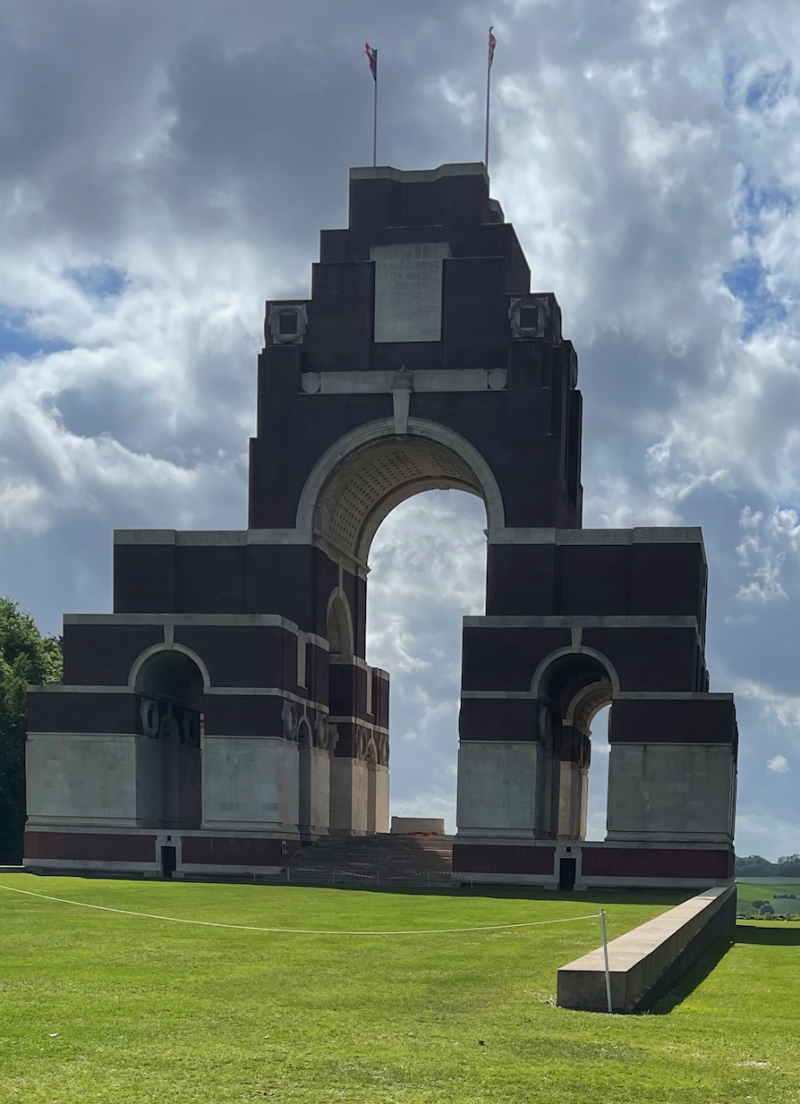
In Flanders, once again the fields are green,
starred with bright red corn poppies. Trees grow strong
and lush. In woods the bluebells are in bloom,
but now the contours of the land have changed.
The tracks of trenches can still be seen and walked.
Bomb craters, grassed and filled but hollows still.
There are no acrid smells of mustard gas.
The smokeless tang of cordite has long gone.
The stench of stagnant mud, of unwashed men,
of human death no longer lingers here.
But, at the forest’s edge, a parched black oak
keeps watch, a sentinel of that old war.
No bombs explode, no bullets ping to find
another young, gullible volunteer
doing his bit. The songs of blackbirds, thrushes
and nightingales cut through the morning mist
whilst buzzing bees populate the gardens.
Sheep bleat at any visitors. With luck
you’ll hear a cuckoo calling from the trees.
Farms flourish, gardens thrive, flooding the air
with sweet honeysuckle, roses, jasmine.
Even the smell of freshly spread manure
is welcome in this land made fresh again.
On the horizon stands a village now,
its skyline marked, once only, by a spire,
but now broken by granite monuments.
In corners of these foreign fields you see
places that are forever England. Here
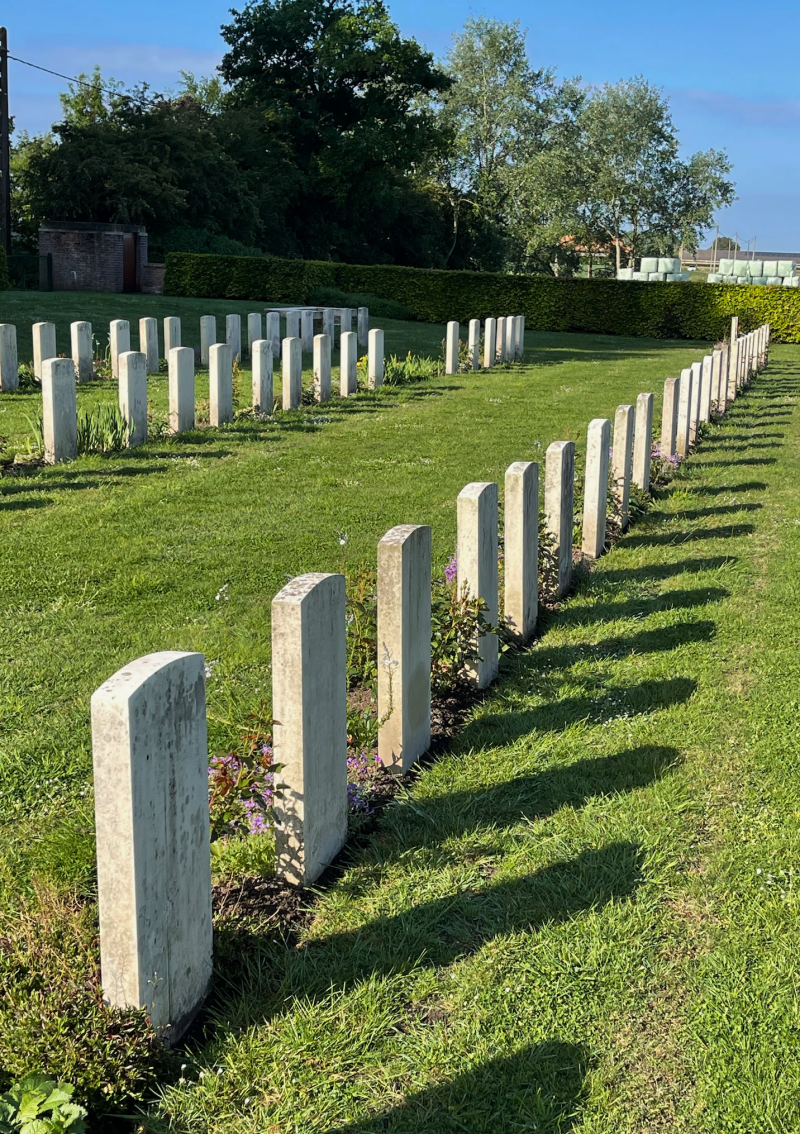
stand groups of pristine-white Portland stone slabs,
standing as at attention. As in death,
as in life, known unto God and family.